
400
configurations
Not sure which cord you need?
Answer a few quick questions and we’ll narrow it down for you.
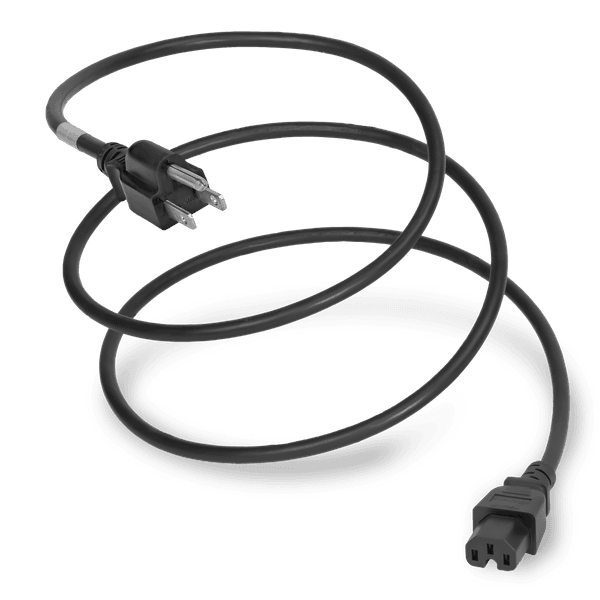 In stock (106)
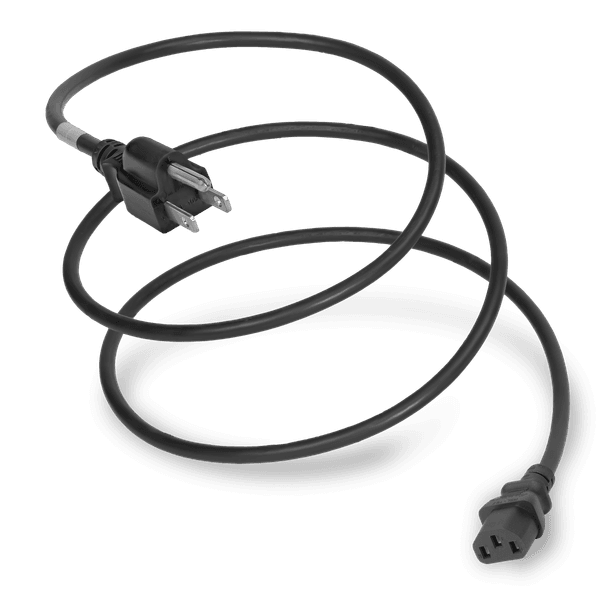 In stock (80)
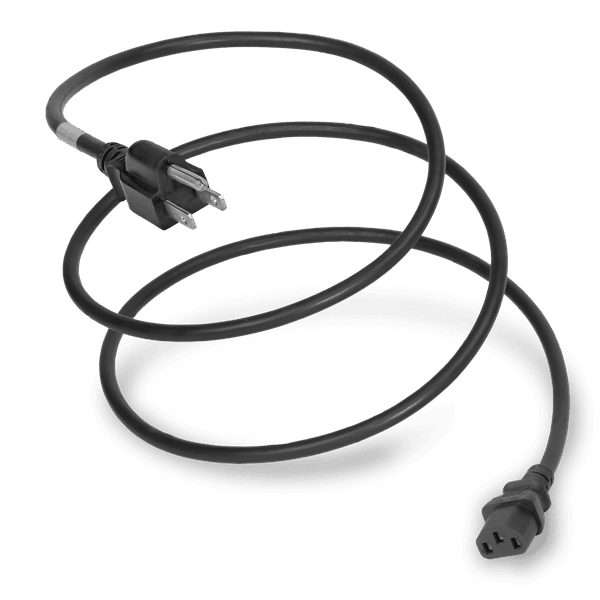 Made to order
- In stock (180)
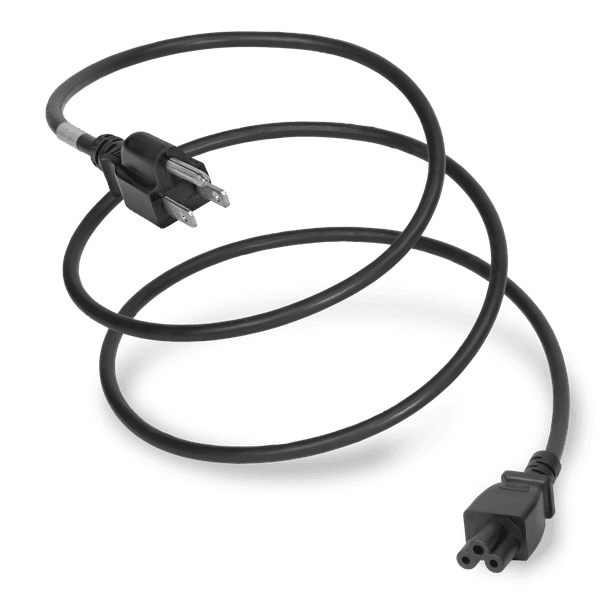 In stock (48)
 Made to order
- In stock (30)
Length — 1 Foot
 In stock (67)
 Made to order
 Made to order
 In stock (523)
 Made to order
-CT-BLK.png) Made to order
Made to order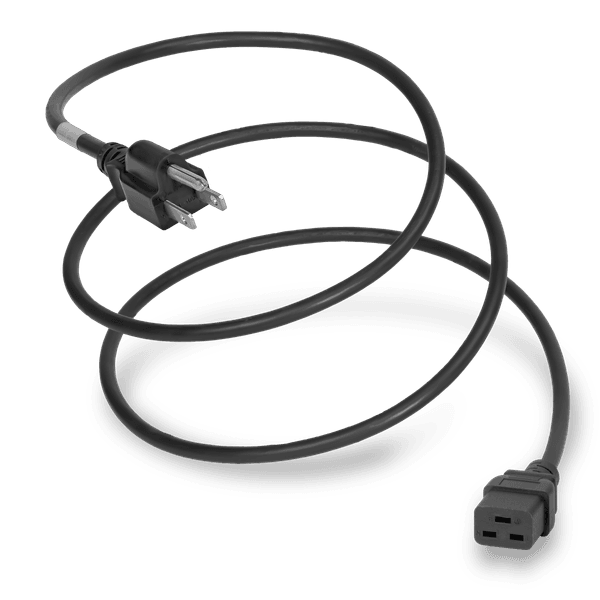 Made to order
- In stock (4)
Length — 6 Feet
 In stock (80)
 In stock (528)
Length — 1 Foot
 Made to order
- In stock (2)
Length — 2 Feet
 In stock (48)
Length — 1 Foot
 In stock (162)
 In stock (21)
Length — 1 Foot
 In stock (135)
Length — 1 Foot
 Made to order
 Made to order
 In stock (256)
 In stock (1)
Length — 8 Feet
 Made to order
 In stock (198)
Length — 1 Foot
- In stock (5)
Length — 1 Foot
 Made to order
 Made to order
 Made to order
-CT-BLK.png) Made to order
Made to order- Made to order
- Made to order
Length — 10 Feet
 Made to order
 Made to order
 Made to order
 Made to order
Length — 10 Feet
 Made to order
- Made to order
All 400 part numbers in NEMA Power Cords — every color and length, one link each
- 51515-H-024Black, 2ft
- 51515-H-036Black, 3ft
- 51515-H-096Black, 8ft
- 51515-H-144Black, 12ft
- 51515-H-012Black, 1ft
- 51515-H-048Black, 4ft
- 51515-H-072Black, 6ft
- 51515-H-180Black, 15ft
- 51515-H-120Black, 10ft
- 51515-H-240Black, 20ft
- 51515-H-015Black, 1.25ft
- 51515-H-021Black, 1.75ft
- 51515-H-027Black, 2.25ft
- 51515-H-039Black, 1.0 m
- 51515-H-060Black, 5ft
- 51515-H-033Black, 33 inches
- 51515-H-048-WHTWhite, 4ft
- 51515-H-072-WHTWhite, 6ft
- 51515-H-096-WHTWhite, 8ft
- 51515-H-036-WHTWhite, 3ft
- 51515-H-024-BLUBlue, 2ft
- 51515-H-036-BLUBlue, 3ft
- 51515-H-048-BLUBlue, 4ft
- 51515-H-060-BLUBlue, 5ft
- 51515-H-072-BLUBlue, 6ft
- 51515-H-096-BLUBlue, 8ft
- 51515-H-120-BLUBlue, 10ft
- 51515-H-144-BLUBlue, 12ft
- 51515-H-012-BLUBlue, 1ft
- 51515-H-084-BLUBlue, 7ft
- 51515-H-024-REDRed, 2ft
- 51515-H-036-REDRed, 3ft
- 51515-H-048-REDRed, 4ft
- 51515-H-072-REDRed, 6ft
- 51515-H-096-REDRed, 8ft
- 51515-H-120-REDRed, 10ft
- 51515-H-060-REDRed, 5ft
- 51515-H-144-REDRed, 12ft
- 51513-F-012Black, 1ft
- 51513-F-018Black, 1.5ft
- 51513-F-024Black, 2ft
- 51513-F-030Black, 2.5ft
- 51513-F-036Black, 3ft
- 51513-F-048Black, 4ft
- 51513-F-060Black, 5ft
- 51513-F-072Black, 6ft
- 51513-F-084Black, 7ft
- 51513-F-120Black, 10ft
- 51513-F-096Black, 8ft
- 51513-F-144Black, 12ft
- 51513-F-180Black, 15ft
- 51513-F-066Black, 5.5ft
- 51513-F-300Black, 25ft
- 51513-F-240Black, 20ft
- 51513-F-042Black, 3.5ft
- 51513-F-054Black, 4.5ft
- 51513-F-108Black, 9ft
- 51513-F-132Black, 11ft
- 51513-F-156Black, 13ft
- 51513-F-168Black, 14ft
- 51513-F-036-WHTWhite, 3ft
- 51513-F-024-WHTWhite, 2ft
- 51513-F-048-WHTWhite, 4ft
- 51513-F-060-WHTWhite, 5ft
- 51513-F-120-WHTWhite, 10ft
- 51513-F-072-WHTWhite, 6ft
- 51513-F-012-WHTWhite, 1ft
- 51513-F-084-WHTWhite, 7ft
- 51513-F-012-REDRed, 1ft
- 51513-F-120-REDRed, 10ft
- 51513-F-072-REDRed, 6ft
- 51513-F-060-REDRed, 5ft
- 51513-F-048-REDRed, 4ft
- 51513-F-036-REDRed, 3ft
- 51513-F-024-REDRed, 2ft
- 51513-F-012-BLUBlue, 1ft
- 51513-F-024-BLUBlue, 2ft
- 51513-F-036-BLUBlue, 3ft
- 51513-F-048-BLUBlue, 4ft
- 51513-F-060-BLUBlue, 5ft
- 51513-F-072-BLUBlue, 6ft
- 51513-F-120-BLUBlue, 10ft
- 51513-F-096-BLUBlue, 8ft
- 51513-F-012-GRNGreen, 1ft
- 51513-F-024-GRNGreen, 2ft
- 51513-F-036-GRNGreen, 3ft
- 51513-F-048-GRNGreen, 4ft
- 51513-F-060-GRNGreen, 5ft
- 51513-F-072-GRNGreen, 6ft
- 51513-F-120-GRNGreen, 10ft
- 51513-SVT-024Black, 2ft
- 51513-SVT-120Black, 10ft
- 51513-SVT-300Black, 25ft
- 51513-SVT-012Black, 1ft
- 51513-SVT-036Black, 3ft
- 51513-SVT-060Black, 5ft
- 51513-SVT-072Black, 6ft
- 51513-SVT-144Black, 12ft
- 51513-SVT-180Black, 15ft
- 51513-H-024Black, 2ft
- 51513-H-036Black, 3ft
- 51513-H-096Black, 8ft
- 51513-H-144Black, 12ft
- 51513-H-012Black, 1ft
- 51513-H-048Black, 4ft
- 51513-H-072Black, 6ft
- 51513-H-180Black, 15ft
- 51513-H-120Black, 10ft
- 51513-H-084Black, 7ft
- 51513-H-240Black, 20ft
- 51513-H-060Black, 5ft
- 51513-H-018Black, 1.5ft
- 51513-H-030Black, 2.5ft
- 51513-H-300Black, 25ft
- 51513-H-024-REDRed, 2ft
- 51513-H-036-REDRed, 3ft
- 51513-H-096-REDRed, 8ft
- 51513-H-012-REDRed, 1ft
- 51513-H-048-REDRed, 4ft
- 51513-H-072-REDRed, 6ft
- 51513-H-180-REDRed, 15ft
- 51513-H-120-REDRed, 10ft
- 51513-H-060-REDRed, 5ft
- 51513-H-144-REDRed, 12ft
- 51513-H-084-REDRed, 7ft
- 51513-H-108-REDRed, 9ft
- 51513-H-024-GRNGreen, 2ft
- 51513-H-036-GRNGreen, 3ft
- 51513-H-096-GRNGreen, 8ft
- 51513-H-012-GRNGreen, 1ft
- 51513-H-048-GRNGreen, 4ft
- 51513-H-072-GRNGreen, 6ft
- 51513-H-180-GRNGreen, 15ft
- 51513-H-120-GRNGreen, 10ft
- 51513-H-060-GRNGreen, 5ft
- 51513-H-084-GRNGreen, 7ft
- 51513-H-024-BLUBlue, 2ft
- 51513-H-036-BLUBlue, 3ft
- 51513-H-096-BLUBlue, 8ft
- 51513-H-144-BLUBlue, 12ft
- 51513-H-012-BLUBlue, 1ft
- 51513-H-048-BLUBlue, 4ft
- 51513-H-072-BLUBlue, 6ft
- 51513-H-180-BLUBlue, 15ft
- 51513-H-120-BLUBlue, 10ft
- 51513-H-060-BLUBlue, 5ft
- 51513-H-084-BLUBlue, 7ft
- 51513-H-108-BLUBlue, 9ft
- 51513-H-024-YELYellow, 2ft
- 51513-H-036-YELYellow, 3ft
- 51513-H-096-YELYellow, 8ft
- 51513-H-144-YELYellow, 12ft
- 51513-H-012-YELYellow, 1ft
- 51513-H-048-YELYellow, 4ft
- 51513-H-072-YELYellow, 6ft
- 51513-H-180-YELYellow, 15ft
- 51513-H-120-YELYellow, 10ft
- 51513-H-060-YELYellow, 5ft
- 51513-H-084-YELYellow, 7ft
- 51513-H-024-ORGOrange, 2ft
- 51513-H-036-ORGOrange, 3ft
- 51513-H-096-ORGOrange, 8ft
- 51513-H-012-ORGOrange, 1ft
- 51513-H-048-ORGOrange, 4ft
- 51513-H-072-ORGOrange, 6ft
- 51513-H-180-ORGOrange, 15ft
- 51513-H-120-ORGOrange, 10ft
- 51513-H-060-ORGOrange, 5ft
- 51513-H-084-ORGOrange, 7ft
- 51513-H-144-ORGOrange, 12ft
- 51513-H-024-PURPurple, 2ft
- 51513-H-036-PURPurple, 3ft
- 51513-H-096-PURPurple, 8ft
- 51513-H-012-PURPurple, 1ft
- 51513-H-048-PURPurple, 4ft
- 51513-H-072-PURPurple, 6ft
- 51513-H-180-PURPurple, 15ft
- 51513-H-120-PURPurple, 10ft
- 51513-H-060-PURPurple, 5ft
- 51513-H-012-WHTWhite, 1ft
- 51513-H-024-WHTWhite, 2ft
- 51513-H-036-WHTWhite, 3ft
- 51513-H-048-WHTWhite, 4ft
- 51513-H-072-WHTWhite, 6ft
- 51513-H-096-WHTWhite, 8ft
- 51513-H-120-WHTWhite, 10ft
- 51513-H-144-WHTWhite, 12ft
- 51513-H-180-WHTWhite, 15ft
- 51505-SVT-012Black, 1ft
- 51505-SVT-036Black, 3ft
- 51505-SVT-072Black, 6ft
- 51505-SVT-120Black, 10ft
- 51505-SVT-180Black, 15ft
- 11507-P2-036Black, 3ft
- 11507-P2-018Black, 1.5ft
- 11507-P2-012Black, 1ft
- 515515-G-072Black, 6ft
- 515515-G-012Black, 1ft
- 515515-G-024Black, 2ft
- 515515-G-036Black, 3ft
- 515515-G-120Black, 10ft
- 515515-G-180Black, 15ft
- 515515-G-300Black, 25ft
- 515515-H-060Black, 5ft
- 515515-H-120Black, 10ft
- 515515-H-180Black, 15ft
- 515515-H-240Black, 20ft
- 515515-H-300Black, 25ft
- 515515-H-600Black, 50ft
- 515515-H-144Black, 12ft
- 515515-H-072Black, 6ft
- 515515-H-036Black, 3ft
- 515515-H-096Black, 8ft
- 515515-H-012Black, 1ft
- 515515-H-024Black, 2ft
- R515515-H-006-GRYGray, 1ft
- 515515-H-300.969Yellow, 25ft
- 52013-H-036Black, 3ft
- 52013-H-072Black, 6ft
- 52013-H-096Black, 8ft
- 52013-H-144Black, 12ft
- 52013-H-180Black, 15ft
- 52013-H-060Black, 5ft
- 52013-H-084Black, 7ft
- 52013-H-120Black, 10ft
- 52013-H-012Black, 1ft
- 52013-H-036-GRYGray, 3ft
- 52013-H-060-GRYGray, 5ft
- 61513-H-036Black, 3ft
- 61513-H-072Black, 6ft
- 61513-H-098Black, 8ft
- 61513-H-120Black, 10ft
- 61513-H-144Black, 12ft
- 61513-H-180Black, 15ft
- 61513-H-012Black, 1ft
- 61513-H-072-BLUBlue, 6ft
- 61513-H-096-BLUBlue, 8ft
- 61513-H-072-REDRed, 6ft
- 61513-H-096-REDRed, 8ft
- 51500-H-012Black, 1ft
- 51500-H-060Black, 5ft
- 51500-H-144Black, 12ft
- 51500-H-072.NABlack, 6ft
- 51500-H-096Black, 8ft
- 51500-H-120.NABlack, 10ft
- 51500-H-036Black, 3ft
- 51500-H-132Black, 11ft
- 51500-H-126Black, 10.5ft
- 51500-H-024Black, 2ft
- 51500-H-156Black, 13ft
- 51500-H-118Black, 3.0 m
- 51500-H-168Black, 14ft
- 51500-H-084Black, 7ft
- 51500-H-098Black, 2.5 m
- 51500-H-048Black, 4ft
- 51500-H-108Black, 9ft
- 51500-H-180.NABlack, 15ft
- 51513-G-036Black, 3ft
- 51513-G-072Black, 6ft
- 51513-G-120Black, 10ft
- 51513-G-300Black, 25ft
- 51513-G-180Black, 15ft
- 51513-G-012Black, 1ft
- 51519-H-120Black, 10ft
- 51519-H-012Black, 1ft
- 51519-H-024Black, 2ft
- 51519-H-036Black, 3ft
- 51519-H-048Black, 4ft
- 51519-H-060Black, 5ft
- 51519-H-072Black, 6ft
- 51519-H-096Black, 8ft
- 51519-H-144Black, 12ft
- 51519-H-180Black, 15ft
- 51519-H-036-WHTWhite, 3ft
- 51519-H-072-WHT.PAWhite, 6ft
- 51519-H-108-WHTWhite, 9ft
- 51519-H-120-WHTWhite, 10ft
- 51519-H-144-WHTWhite, 12ft
- 51519-H-180-WHTWhite, 15ft
- 11507-P2-072Black, 6ft
- 62019-J-180Black, 15ft
- 62019-J-144Black, 12ft
- 62019-J-120Black, 10ft
- 62019-J-096Black, 8ft
- 62019-J-084Black, 7ft
- 62019-J-072Black, 6ft
- 62019-J-060Black, 5ft
- 62019-J-036Black, 3ft
- 62019-J-012Black, 1ft
- 62019-J-240Black, 20ft
- 515520-J-012Black, 1ft
- 62013-H-012Black, 1ft
- 62013-H-024Black, 2ft
- 62013-H-036Black, 3ft
- 62013-H-048Black, 4ft
- 62013-H-060Black, 5ft
- 62013-H-072Black, 6ft
- 62013-H-079Black, 2.0 m
- 62013-H-084Black, 7ft
- 62013-H-096Black, 8ft
- 62013-H-120Black, 10ft
- 62013-H-144Black, 12ft
- 62013-H-180Black, 15ft
- 62013-H-240Black, 20ft
- 51515-G-024Black, 2ft
- 520L530-J-012Black, 1ft
- 520520-J-300Black, 25ft
- 520520-J-036Black, 3ft
- 520520-J-072Black, 6ft
- 520520-J-120Black, 10ft
- 520520-J-180Black, 15ft
- 520520-J-600Black, 50ft
- 520520-J-012Black, 1ft
- 515L520-J-012Black, 1ft
- 515-L530-H-012Black, 1ft
- 61500-H-120.NABlack, 10ft
- 61500-H-024Black, 2ft
- 61500-H-084Black, 7ft
- 61500-H-036Black, 3ft
- 61500-H-096Black, 8ft
- 61500-H-012Black, 1ft
- 61500-H-072.NABlack, 6ft
- 61500-H-048Black, 4ft
- 52019-J-072Black, 6ft
- 52019-J-036Black, 3ft
- 52019-J-098Black, 8ft
- 52019-J-144Black, 12ft
- 52019-J-180Black, 15ft
- 52019-J-300Black, 25ft
- 52019-J-120Black, 10ft
- 61515-H-072Black, 6ft
- 61515-H-180Black, 15ft
- 61519-H-096Black, 8ft
- 62000-J-108Black, 9ft
- 62000-J-120.NABlack, 10ft
- 62000-J-156Black, 13ft
- 62000-J-084Black, 7ft
- 62000-J-144Black, 12ft
- 62000-J-024Black, 2ft
- 62000-J-060Black, 5ft
- 62000-J-048Black, 4ft
- 62000-J-180.NABlack, 15ft
- 62000-J-012Black, 1ft
- 62000-J-132Black, 11ft
- 62000-J-036Black, 3ft
- 62000-J-096Black, 8ft
- 62000-J-168Black, 14ft
- 62000-J-072.NABlack, 6ft
- 515-L515-H-012Black, 1ft
- 515520-H-012Black, 1ft
- 620620-J-072Black, 6ft
- 620620-J-120Black, 10ft
- 620620-J-300Black, 25ft
- 520U13-H-012Black, 1ft
- 520U13-H-036Black, 3ft
- 520U13-H-072Black, 6ft
- 520U13-H-096Black, 8ft
- 520U13-H-120Black, 10ft
- 520U13-H-180Black, 15ft
- 51513R-SVT-072Black, 6ft
- 51513R-SVT-120Black, 10ft
- 51513R-SVT-036Black, 3ft
- 515515(2)-G-072Black, 6ft
- 515515(2)-G-036Black, 3ft
- 515515(2)-G-014Black, 14"
- 51513-SVTS-144Black, 12ft
- 51513-SVTS-072Black, 6ft
- 11507-P2-120Black, 10ft
- 52015-H-012Black, 1ft
- 52015-H-072Black, 6ft
- 52015-H-096Black, 8ft
- 52015-H-144Black, 12ft
- 52015-H-180Black, 15ft
- 52015-H-120Black, 10ft
- 00615-H-012Black, 1ft
- 00615-H-018Black, 1.5ft
- 00615-H-024Black, 2ft
- 00615-H-030Black, 2.5ft
- 00615-H-048Black, 4ft
- 00615-H-060Black, 5ft
- 00615-H-072Black, 6ft
- 00615-H-084Black, 7ft
- 00615-H-096Black, 8ft
- 00615-H-108Black, 9ft
- 00615-H-120Black, 10ft
- 00615-H-132Black, 11ft
- 00615-H-144Black, 12ft
- 00615-H-156Black, 13ft
- 00615-H-168Black, 14ft
- 00615-H-180Black, 15ft
- 615615-H-072Black, 6ft
- 615615-H-120Black, 10ft
- 615615-H-300Black, 25ft
- 615615-H-180Black, 15ft
- 62015-H-120Black, 10ft
- 515515-J-900Black, 75ft
- 515515-J-1200Black, 100ft
- 51513(2)-F-120Black, 10ft
- 51513(2)-F-072Black, 6ft
- 51513(2)-F-036Black, 3ft
About NEMA Power Cords
What are NEMA power cords and where are they used?
The National Electrical Manufacturers Association (NEMA) published the ANSI/NEMA WD 6 which specifies wiring devices utilized in North America. These power attachment devices have been thoughtfully engineered to prevent fire hazard and optimize usability. All buildings in North America use these configurations for power sources and can only be accessed with a matching NEMA Plug. Our power cables are built to the various NEMA standards and have all applicable approvals for the intended country of use.
Downgrading a NEMA device: plugging a 15 amp NEMA plug into a 20 amp outlet.
When the engineers at NEMA designed their configuration designs, they considered functionality and accessibility of the users. To increase usability of power sources, they designed some power sources in a way that a lesser rated plug can mate with the supply. For example, the NEMA 5-15P can plug into a NEMA 5-20R Outlet. This applies for the NEMA 6 Series as well, since this application has no electrical hazards, it was a thoughtful consideration of the designers of the configurations.
The plugs and connectors in this collection
What each end is, what it mates with, and where to find every cord built on it.
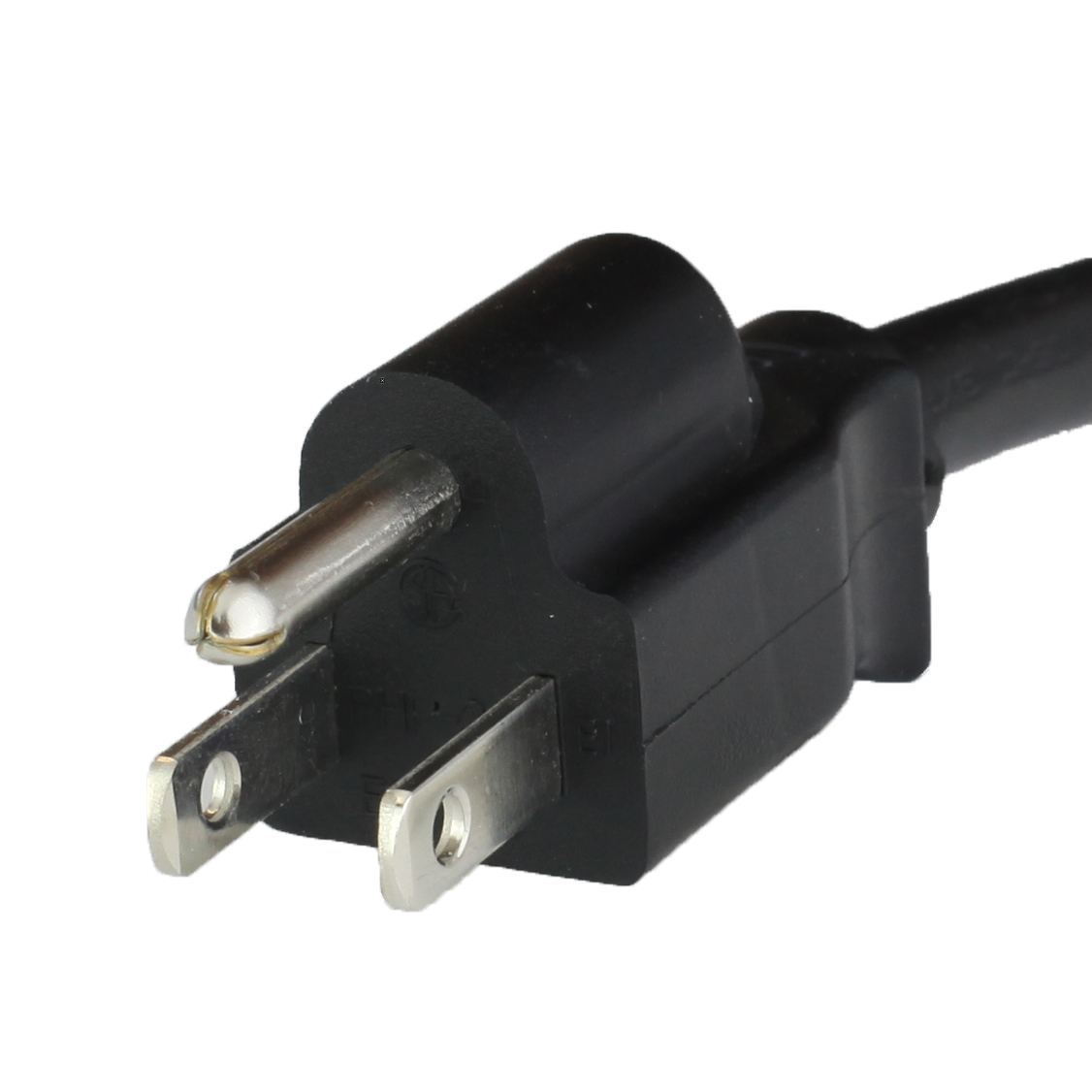
Plug · NEMA
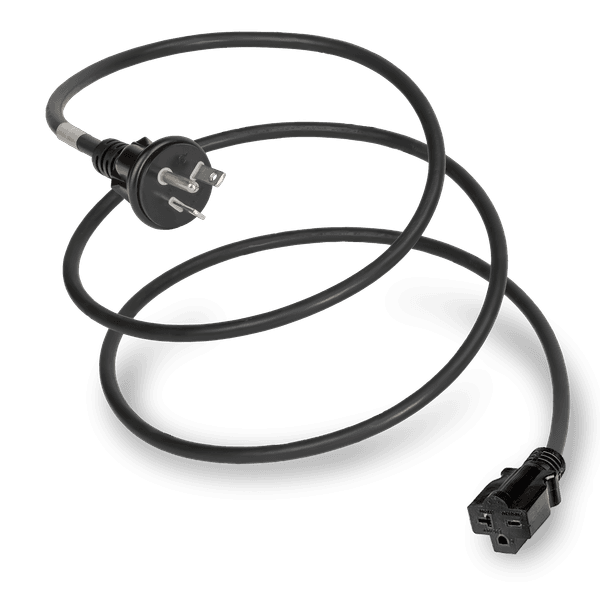
NEMA 5-15P
- 15 Amps
- 125 volts
On 277 of the cords here (69%)
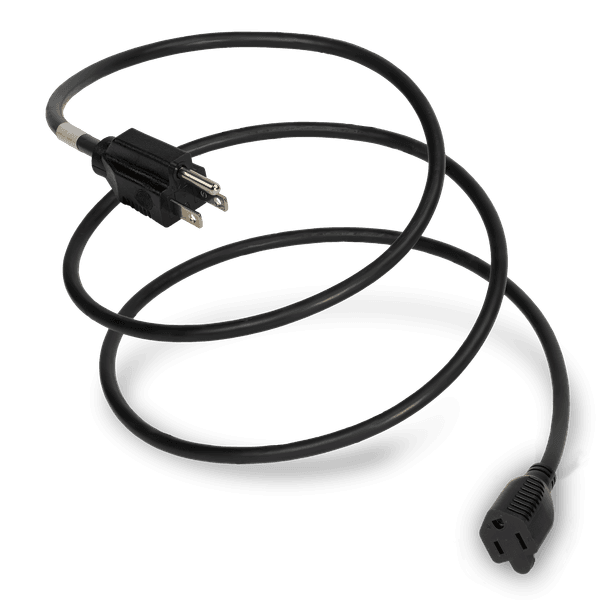
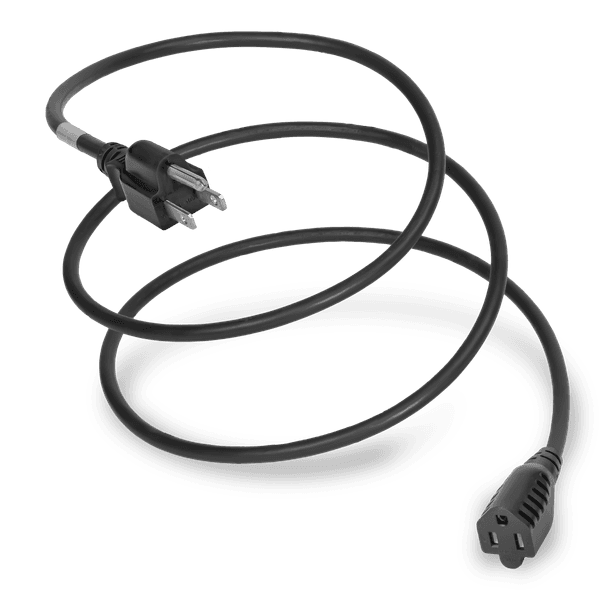
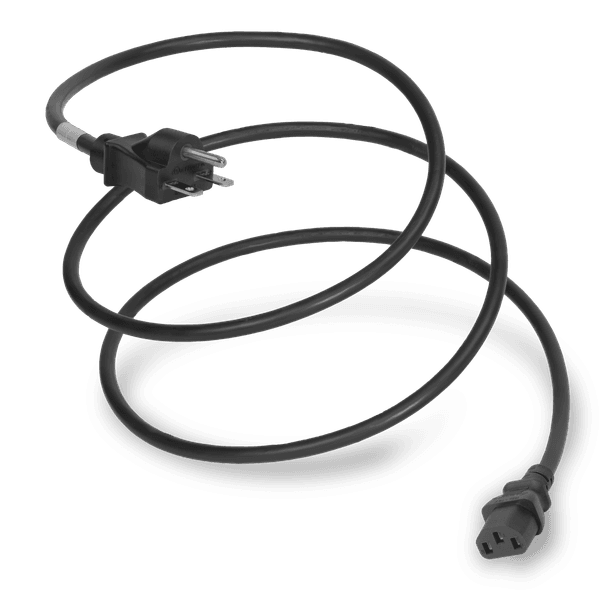
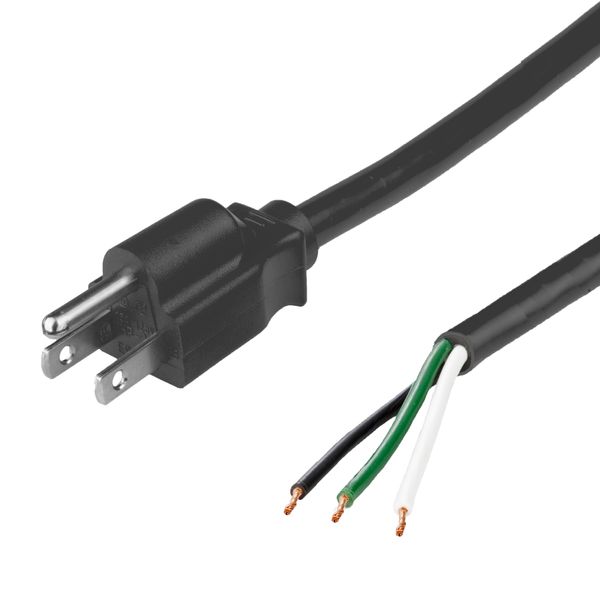
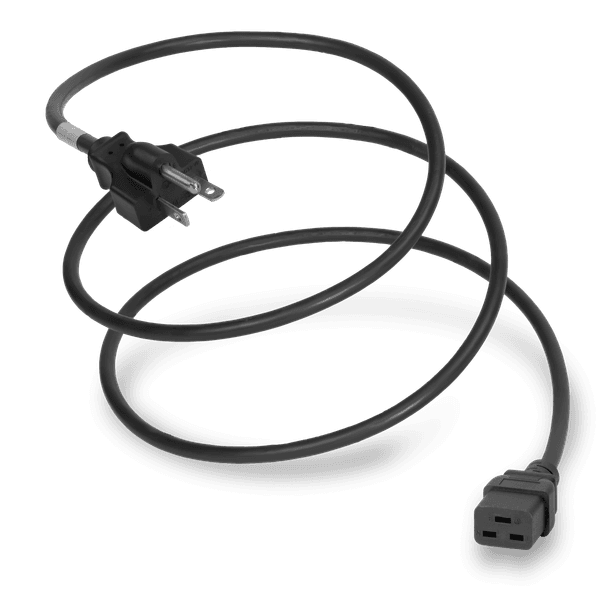
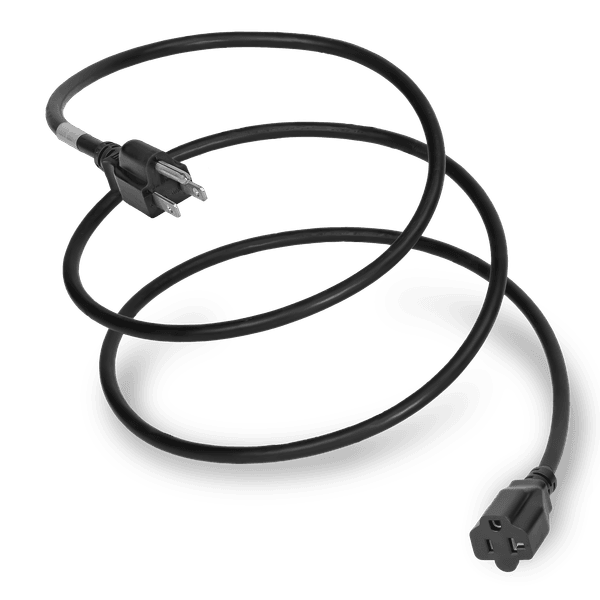
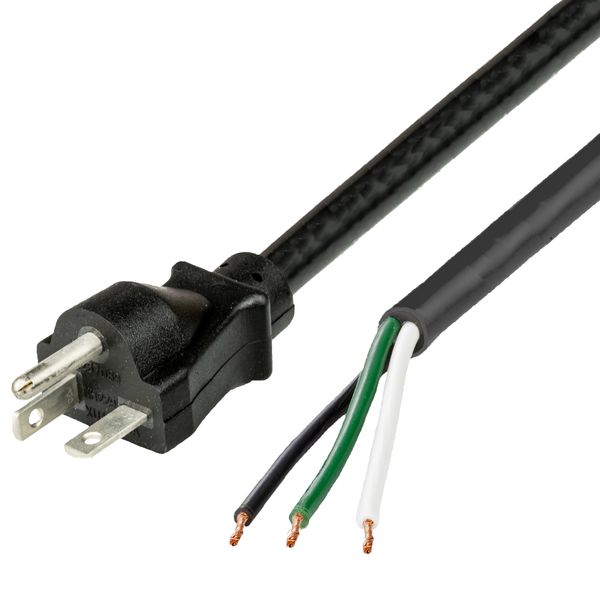
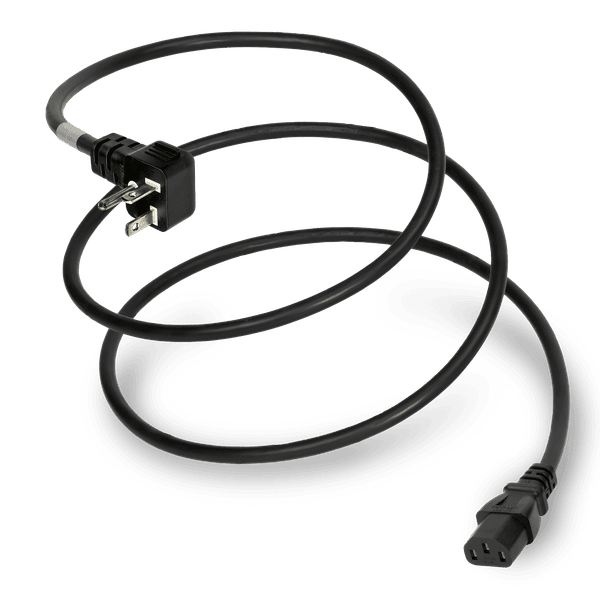
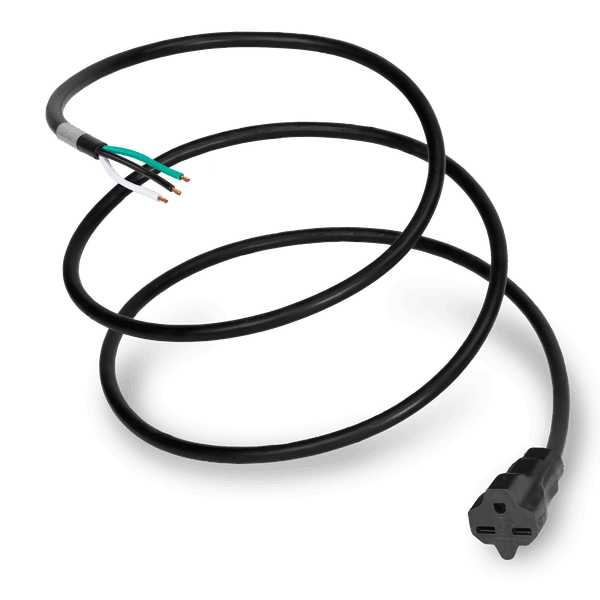
The NEMA 5-15P is a 3 Wire grounded plug featuring two blades (can be equal or unequal widths due to the ground pin forcing polarity) and one ground pin rated up to 125V AC and 15 Amps. The NEMA 5-15P is your standard household plug used for to connect small appliances such as TV's, Microwaves, hairdryers, etc to a wall outlet. The NEMA 5-15P is compatible with a Nema 5-20R T-Slot outlet, which is commonly found in new home installations.
Mates with NEMA 5-15R Outlet
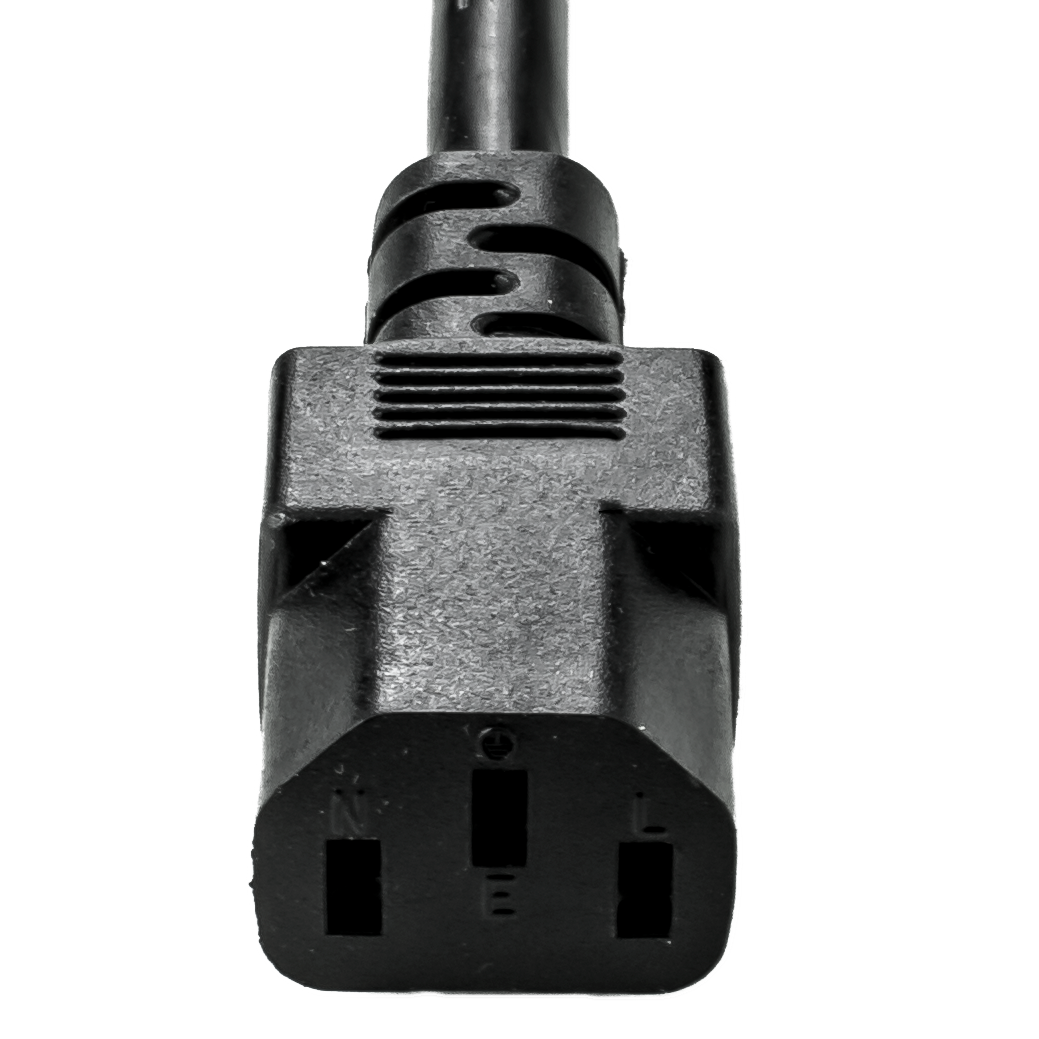
Connector · IEC 60320
IEC 60320 C13
- 15 Amps
- 125/250V
On 202 of the cords here (50%)
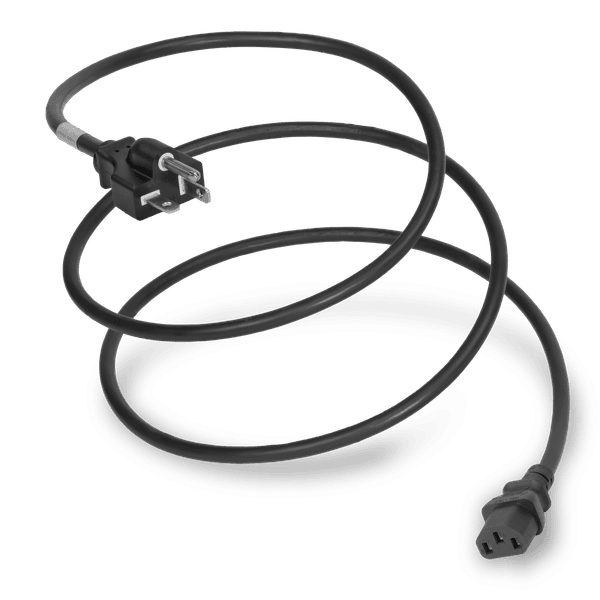
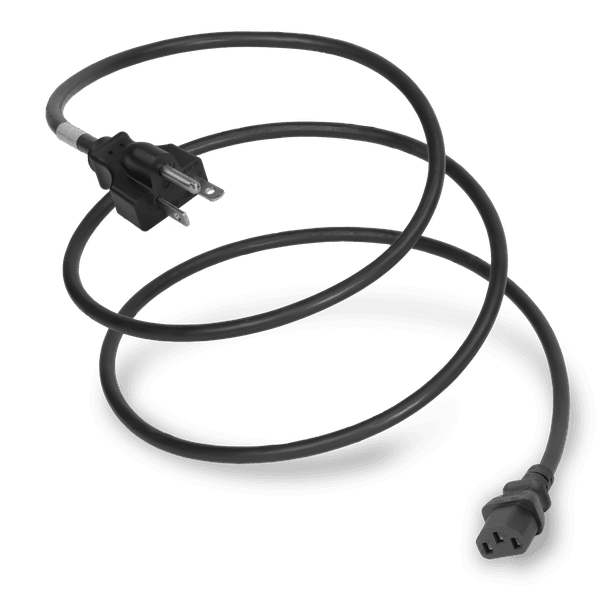
The IEC 60320 C13 is a grounded 3 Wire connector rated up to 250V and 15 Amps. The C13 mates with a C14 inlet, and is commonly used in a jumper cable scenario in IT Installations providing power from a PDU to a server, router, switch or other computing device. Most people know the C13 as 'the thing that plugs into my computer' because it is the standard connector used to power most desktop computers. In a desktop computer application, the most common cable is the NEMA 5-15P to C13, which connects your standard North American wall outlet to a desktop computer.
Mates with IEC 60320 C14 Inlet

Connector · IEC 60320
IEC 60320 C15
- 15 Amps
- 125/250V
On 48 of the cords here (12%)
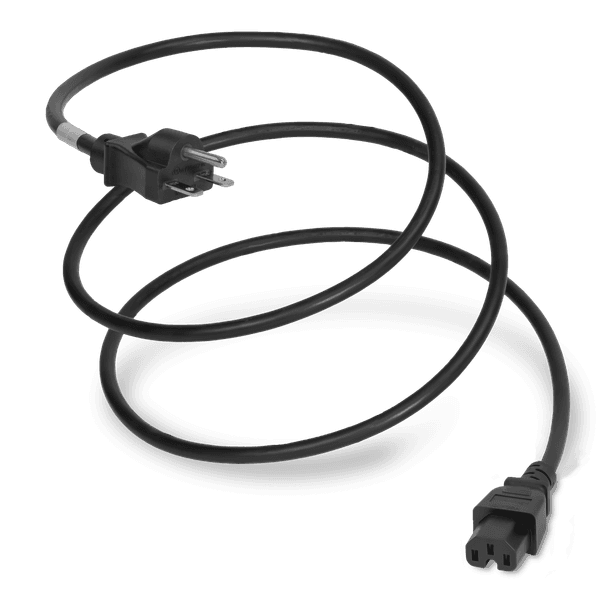
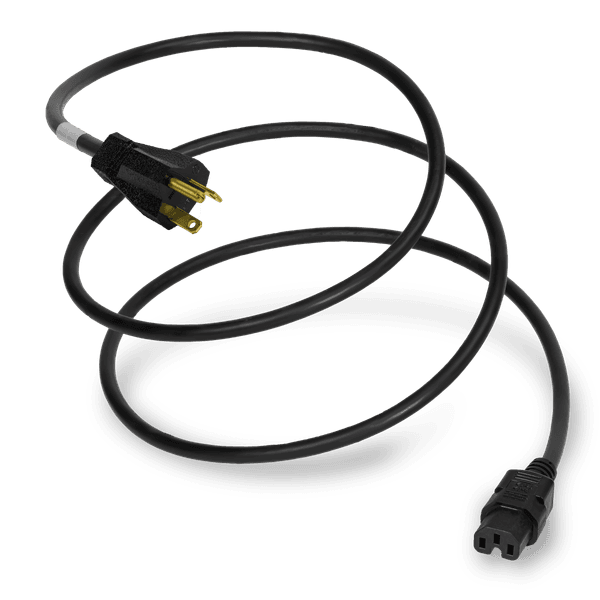
The IEC 320 C15 Power cable is used to power electrical devices that emit so much heat (intentionally or unintentionally) that they require a power connection that can withstand more than the 70 °C (158 °F) temperature rating of the standard C13. In combination with the C14 plug type, the use cases of this high-temperature cable are almost exclusively data center environments. This cable would most likely be found supplying a High-Powered Switch power from a rack-mounted PDU power supply source. If your equipment has a IEC320 C16 Inlet it should only be mated with the matching C15-Power Connector.
Mates with IEC 60320 C16 Inlet
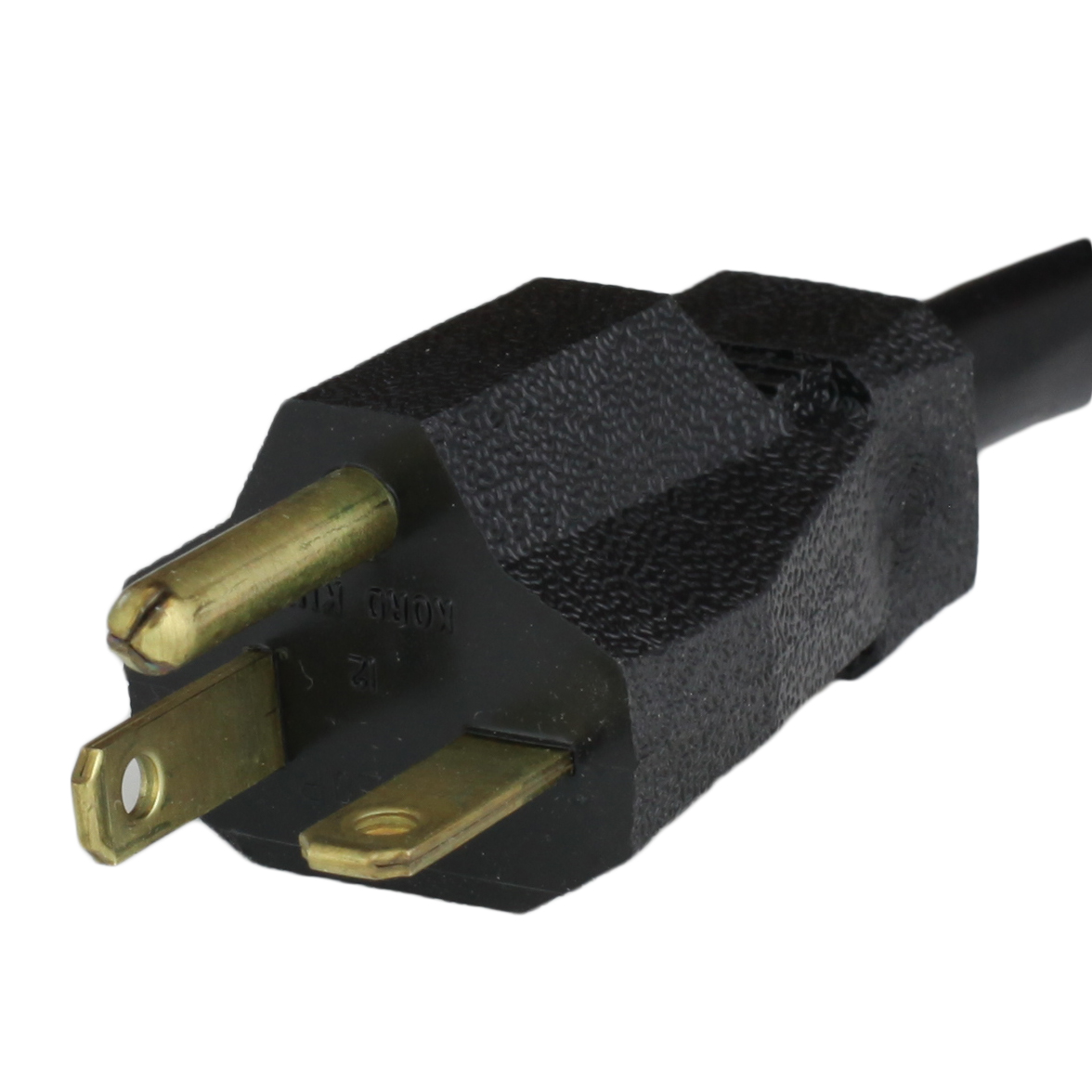
Plug · NEMA
NEMA 6-20P
- 20 Amps
- 250 volts
On 42 of the cords here (10%)
The NEMA 6-20P is a 3 Wire grounded plug featuring two blades and one ground pin rated up to 250V AC and 20 Amps. The NEMA 6-20P has one horizontal blade and one vertical blade and mates with a 6-20R Outlet.
Mates with NEMA 6-20R Outlet
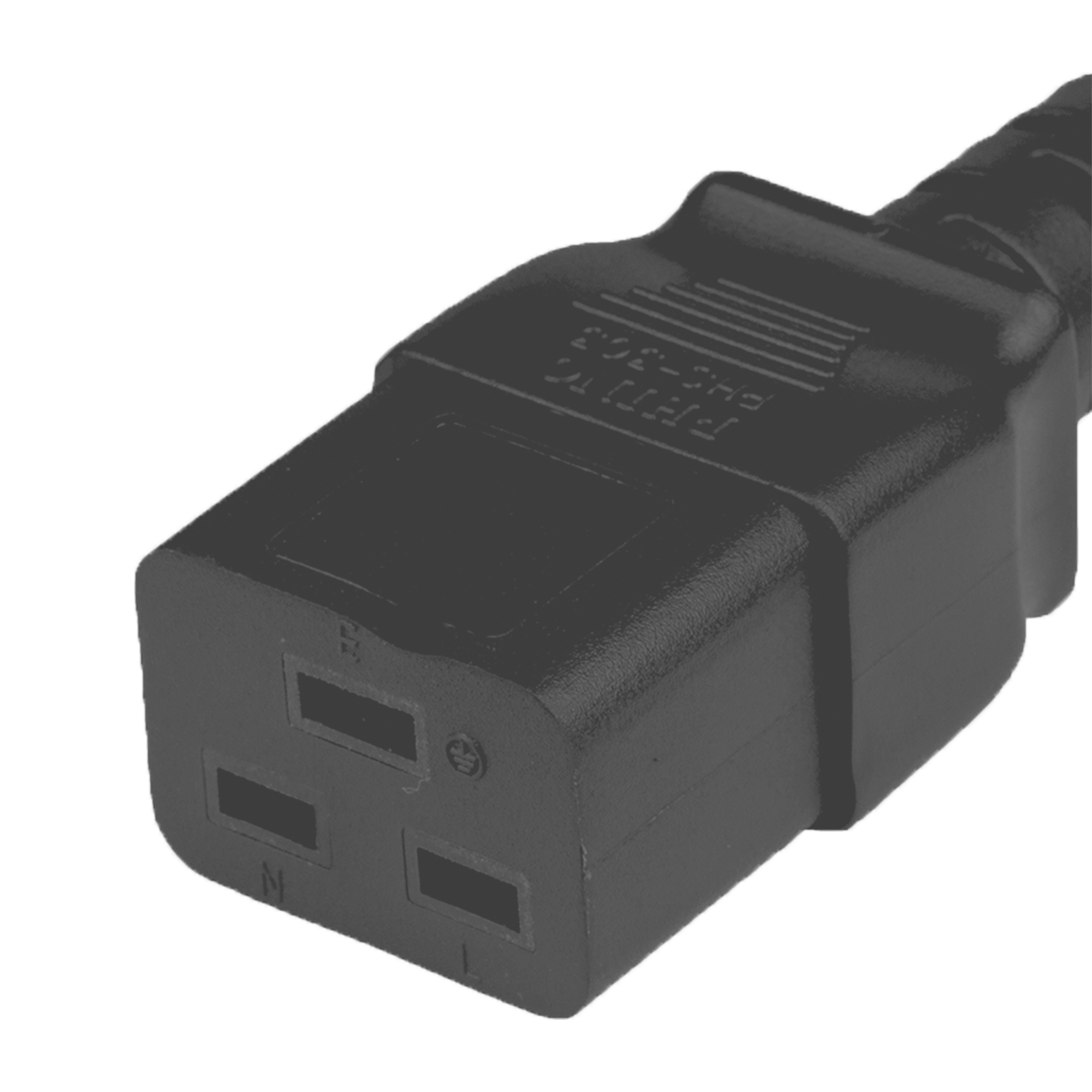
Connector · IEC 60320
IEC 60320 C19
- 20 Amps
- 125/250V
On 34 of the cords here (8%)
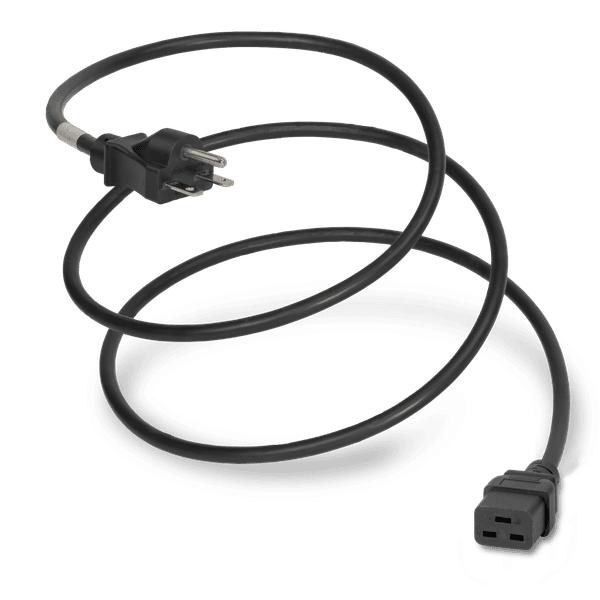
The IEC 60320 C19 is a grounded 3 Wire connector rated up to 250V and 20 Amps. The C19 mates with a C20 inlet, and is commonly used in a jumper cable scenario in IT Installations providing power from a PDU to a server, router, switch or other computing device. The C19 is typically used in high powered blade server chassis, large network routers, and other IT equipment that draws more power than a standard C13 can accommodate.
Mates with IEC 60320 C20 Inlet
Related reading
What is a Grounding Conductor and Why Do Power Cords Have Them?
The purpose of grounding conductors is to provide the path of least resistance from the electrical source back to the ground. Properly sized...
Compliance & Standards · 4 min read
TAA Compliance : What does TAA mean and how does it affect you?
TAA stands for Trade Agreements Act, and is an act of congress passed in 1979 that requires all items sourced for GSA Schedule Contracts to...
Compliance & Standards · 1 min read
Power Cordage : How to choose the right Gauge, Jacket, and Conductor Count
Unlike Construction installations, where licensed electricians are tasked with providing power to various locations, utilizing portable powe...
Power Cords · 8 min read
Choosing the right jacket type for your installation. SJT vs SVT
Cabling in the data center has become incredibly complex as the need for higher density installations has grown.
Power Cords · 2 min read
About NEMA Power Cords
What are NEMA power cords and where are they used?
The National Electrical Manufacturers Association (NEMA) published the ANSI/NEMA WD 6 which specifies wiring devices utilized in North America. These power attachment devices have been thoughtfully engineered to prevent fire hazard and optimize usability. All buildings in North America use these configurations for power sources and can only be accessed with a matching NEMA Plug. Our power cables are built to the various NEMA standards and have all applicable approvals for the intended country of use.
Downgrading a NEMA device: plugging a 15 amp NEMA plug into a 20 amp outlet.
When the engineers at NEMA designed their configuration designs, they considered functionality and accessibility of the users. To increase usability of power sources, they designed some power sources in a way that a lesser rated plug can mate with the supply. For example, the NEMA 5-15P can plug into a NEMA 5-20R Outlet. This applies for the NEMA 6 Series as well, since this application has no electrical hazards, it was a thoughtful consideration of the designers of the configurations.
Related
- NEMA 5-20P Power Cords — 20A 125V
- NEMA 6-15P Industrial Grade Cords — 15A 250V
- Power Cord Selection Calculator
- Same-Day Shipping Power Cords — Order by 2:30 PM ET
- Build a Custom NEMA Power Cord
Choosing the Right NEMA Power Cord: A Quick Reference
Match Your Plug to Your Outlet and Equipment Rating
With 400+ configurations in stock, narrowing down the right NEMA cord comes down to three variables: voltage, amperage, and connector type.
- 125 V applications (NEMA 1-15, 5-15, 5-20): Standard North American single-phase circuits. The 5-15P is the most common; the 5-20P is required when your equipment or circuit is rated for 20 A.
- 250 V applications (NEMA 6-15, 6-20): Used in servers, industrial equipment, and high-density IT deployments where higher voltage reduces current draw and heat.
- Connector end: Most IT equipment uses an IEC 60320 inlet — C13 (15 A), C15 (high-temp 15 A), or C19 (20 A). Match the cord's connector to your device's inlet.
Wire Gauge and Cord Type
Gauge affects how much current the cord can safely carry over a given length:
- 18 AWG: Light-duty, up to 10 A. Suitable for short runs and low-power devices.
- 16 AWG: General-purpose 13 A loads.
- 14 AWG: Standard 15 A cords — the most common choice for servers and networking gear.
- 12 AWG: Heavy-duty 20 A circuits and longer cable runs where voltage drop matters.
All in-stock cords ship same day when ordered by 2:30 PM ET. Need a non-standard length, color, or bulk quantity? Use our configurator or request an instant quote.
Current rating
10–20 Amps
Voltage rating
125–250 volts
Certifications & compliance
- UL
- cUL
- RoHS
- REACH
- Every cord we build is hi-pot tested
- Same-day shipping by 2:30 PM ET
- NET 30/60/90 for approved accounts
- In-house engineering and compliance support
Frequently asked questions
- Does my Nema 1 15p need a ground?
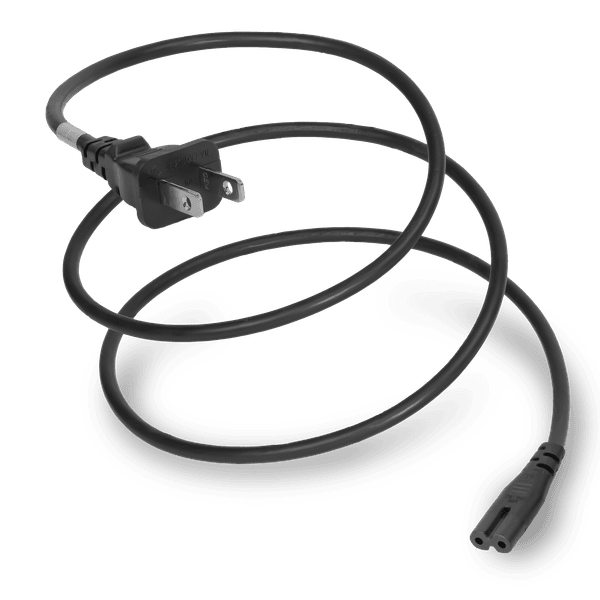
- The NEMA 1-15P Standard does not utilize a ground, the equipment that uses this plug most likely has a double insulated casing that has been approved by NEMA and other applicable safety agencies to not require an electrical ground. In the past, the NEMA 1-15P was the standard plug type, but in recent years it has been replaced by the NEMA 5-15P for safety reasons for electrical devices that do not have additional grounding precautions internally.
- What does NEMA 1-15p polarized plug mean for plugging into a power source?
- The NEMA 1-15 Series are 2 prong, ungrounded cords which are commonly found in North America powering lamps, clocks, radios, battery chargers and other double insulated consumer electronics that don't require grounding. Due to advances in grounding safety standards, the NEMA 1-15R (receptacle) was prohibited from new construction in the United States and Canada in 1962 and has since been replaced by the NEMA 5-15R (receptacle) which is backwards compatible with the 1-15P (ungrounded plug). Due to its plug shape, the 1-15P can be plugged in either way, so in some cases polarity must be established when the device distinguishes between the line and neutral conductors. This is done by making the neutral blade 1/16in bigger than the line blade to prevent reverse connection.
- Are these extension cords rated for outdoor use?
- No. We stock power cables with SJT cable jacket that is rated for indoor use and can withstand oils, chemicals and other things that may be exposed to the cable in an indoor environment. If your looking for an outdoor rated cable, search for extension cords with SJTW cable jacket as these are deemed “Weather Proof”.
- What type of power supply cord do I need?
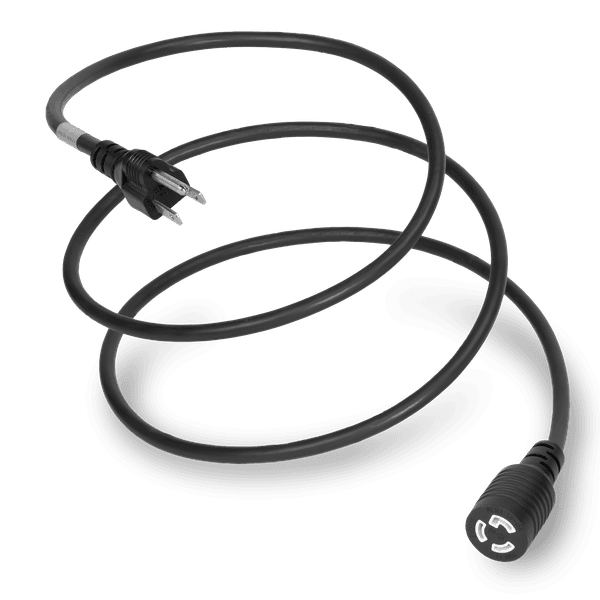
- Your power cord will be determined based on what you are powering in your home, office or industrial warehouse. In North America, the most commonly present power source is a NEMA 5-15R Wall Outlet. If this is your closest power source, then you will need to select the right NEMA 5-15P Power cord to power your device! Look at the power inlet located on your device and reference the different connectors we have available in this product series. We offer the C5, C13, C15, 5-20R, L5-20R, L5-30R, L5-15R and even some splitter options to power multiple devices at once.
- What is the Difference between NEMA 5-15 and 6-15, how to know what power outlet your looking at.?
- NEMA 5-15 is the more popular little brother of the NEMA 6-15. It is much more prevalent across North America, however, it packs half the punch as it delivers 125 Volts compared to the 250 Volts that the NEMA 6-15 delivers. Since this additional power is not required for the majority of household appliances, the 6-15P 250 Volt Power source is generally only located in places where high powered devices or small machines are intended to be used. The NEMA 5-15R will have vertical pin holes, and the 6-15R will have horizontal pin holes.
- Why are there different blade orientations for the plugs?
- Electrical Safety. When the engineers at NEMA devised the orientations for power connections used in North America, their primary concern was electrical safety. To protect the end user, manufacturers and local electrical installations must conform to these specific orientations. Think of the plug orientation as a key, and the electrical outlet power source as a lock. The “key” can only fit into a “lock” that can provide enough power that plug can draw. The outlet is determined based on the wire gauge and overcurrent protection installed by the electrician, while the plug is determined by the manufacturer based on the amount of energy required to power the device. In this way, the end user only has to find the matching orientation, and all of the specifics of electrical safety are handled by professionals.
- What do the different numbers mean for NEMA Power Cord Designations?
- Voltage and Amperage Classification. Under the NEMA classification, the first number (extends into double digits) will designate the voltage and conductor count. The second number (commonly distinguished from the first with a “-”) is the amperage rating. For example the NEMA 1-15P is rated for 125 Volts, without a ground under “NEMA 1” and is rated for up to 15 Amperes of power. To learn more about these classifications, refer to our comprehensive guide on NEMA Locking Configurations.
- Can I plug a 5-15P into a 5-20R outlet?
- Yes. The Engineers at NEMA have thoughtfully considered configurations that can be cross connected where it will not compromise electrical safety. In this circumstance, the NEMA 5-20R Outlet is rated for 125 Volts and 20 Amperes, and the 5-15P plug will only draw up to 15 Amperes. This allows convenience for the end user to access power from a 20 Amp power source, if their equipment only requires up to 15 Amperes.
- What NEMA cord do I need for my equipment?
- Your required power cable will depend on a few factors, including accessible power supplies, the inlet type of your device and the amperage it requires. First determine the inlet type on your equipment, this will be the recessed cavity with 3-5 metal pins sticking out. Refer to our IEC 60320 Reference Chart to determine which specific configuration this is. The NEMA plug type of your cable should be based on the available power outlet near your equipment. The plug will need to match the outlet type, if you are unsure of what that is, refer to our “Components” tab that defines all of the NEMA plug types and what they mate with. We typically offer the wire gauges best suited for the application of the plug/connector combination of the cord set, however for assurance the cable will be suitable for your application you can refer to your equipment's name plate or electrical specifications.
- Are NEMA cords rated for use in Canada?
- Yes. All of our NEMA Product Lines are rated for use in both Canada and the United States. Many countries around the world use the NEMA set of standards for their general use electrical connections, however each country will have its own approval agency, that will determine if the product is “approved” for use in that country. In the United States this is “UL”, and in Canada it is “cUL”, our NEMA Products are approved for through both of these agencies, and thus can be used in either country.
- What is a NEMA power cord and what do the numbers mean?
- NEMA stands for National Electrical Manufacturers Association, the body that standardizes North American plug and receptacle configurations. The designation works as follows:The first digit(s) identify the configuration family (e.g., 5 = 3-wire 125 V grounded; 6 = 3-wire 250 V grounded; 1 = 2-wire 125 V ungrounded).The number after the dash is the ampere rating (15 = 15 A, 20 = 20 A).The letter suffix indicates the device type: P = plug (male), R = receptacle (female).For example, a NEMA 5-15P is a 3-wire, 125 V, 15 A male plug — the standard North American power plug.
- What is the difference between a NEMA 5-15P and a NEMA 5-20P plug?
- Both are 3-wire, 125 V grounded plugs, but they differ in amperage and blade shape:NEMA 5-15P (15 A): Two parallel flat blades plus a round ground pin. Fits any standard 15 A or 20 A outlet.NEMA 5-20P (20 A): One blade is rotated 90° (T-shaped). It fits only 20 A receptacles (5-20R) and the 20 A slot of a 5-20R/5-15R combo outlet.If your equipment nameplate calls for a 20 A circuit, use a 5-20P cord. Do not use a 5-15P cord on a 20 A-rated device.
- What is the difference between NEMA 5-15 and NEMA 6-15?
- The key difference is voltage:NEMA 5-15 (125 V, 15 A): Standard North American household voltage. Used for most IT equipment, monitors, and general-purpose devices.NEMA 6-15 (250 V, 15 A): Higher voltage, used for industrial equipment, some servers, and power-hungry devices that run more efficiently at 250 V.The plugs are physically different and not interchangeable, so check your equipment's input voltage rating before ordering.
- Are these NEMA cords rated for use in Canada?
- Many cords in this collection carry both UL (US) and cUL (Canadian) listings, making them suitable for use in Canada under Canadian Electrical Code requirements. Look for the cUL certification badge on each product listing. If Canadian approval is mandatory for your application, filter by certification or contact our team to confirm compliance before ordering.